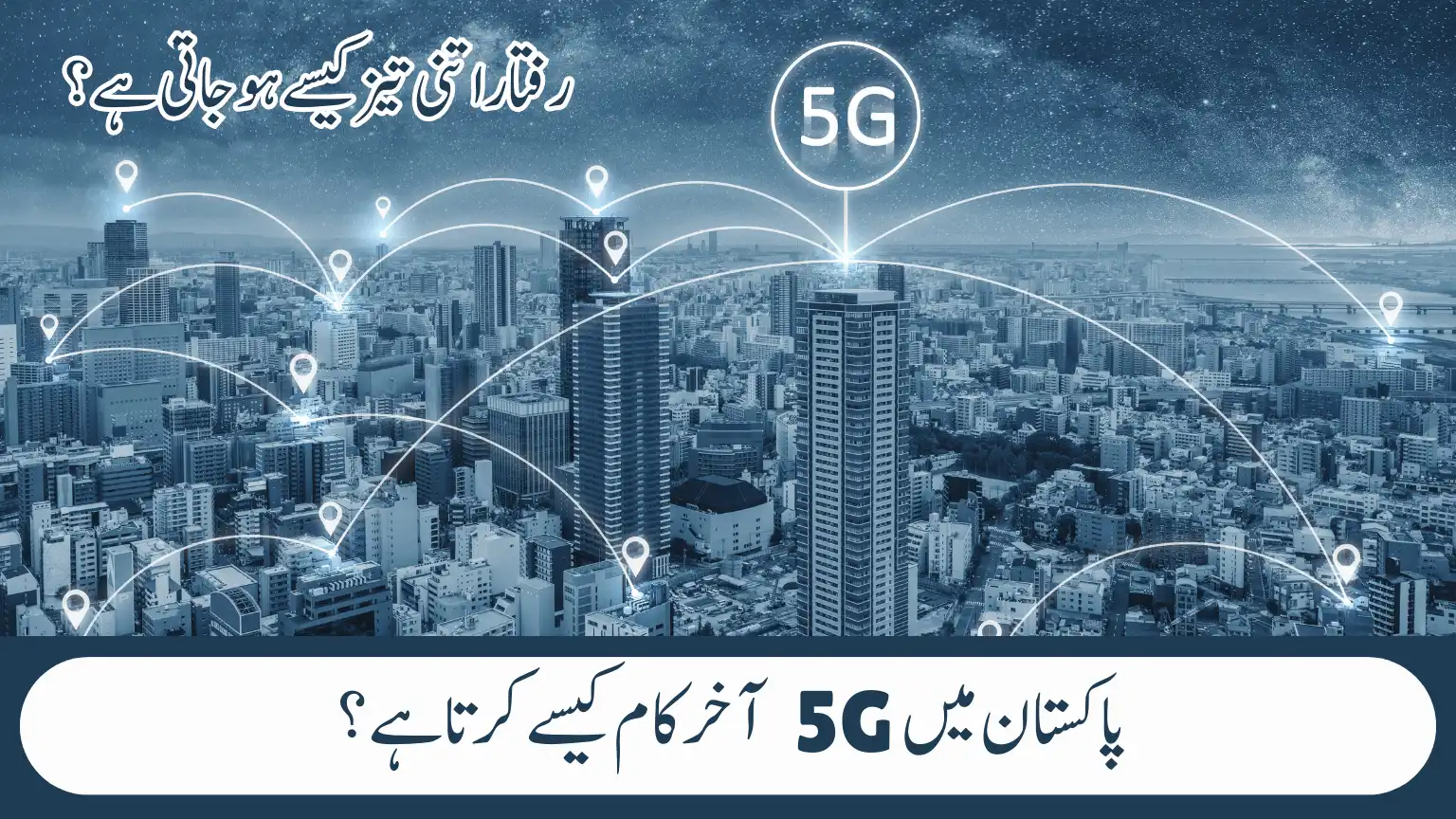

5G is one of the most important and powerful mobile technologies planned for Pakistan. Many people hear about 5G speed, but very few understand how 5G works in Pakistan and what actually happens behind the scenes.
What Is 5G?
5G works by using advanced radio signals, smart network systems, and small cell towers to deliver faster internet, lower delay, and stronger connections than older mobile networks.
How 5G Works in Pakistan
In Pakistan, 5G works through a combination of upgraded mobile towers, advanced radio waves, and intelligent network control systems. Telecom companies connect these elements to deliver high-speed internet to users.
Below is a clear step-by-step explanation.
Step 1: 5G Uses Advanced Radio Waves
5G works by sending data through high-frequency radio waves. These waves carry information between:
- Your mobile phone
- Nearby 5G cell towers
- The main telecom network
In Pakistan, telecom operators are upgrading existing infrastructure to support these new signals.
Why this matters:
Advanced radio waves can carry more data at higher speed.
Step 2: Small Cell Towers Improve Signal Strength
Unlike older networks, 5G uses small cell towers instead of relying only on large towers.
These small towers are placed:
- On streets
- On buildings
- In busy urban areas
In cities like Karachi, Lahore, and Islamabad, small cells help maintain strong signals even in crowded locations.
Benefit:
Better coverage and fewer signal drops.
Step 3: Fast Data Transmission
5G transfers data much faster than older networks.
When you:
- Open a website
- Watch a video
- Download a file
Your request reaches the network almost instantly, and data comes back with very little waiting time.
Result for Pakistan users:
- Faster browsing
- Smooth video streaming
- Quick downloads
Step 4: Very Low Network Delay
One of the strongest features of 5G is low delay, also known as latency.
Low delay means:
- Your action
- Network response
Happen almost at the same time.
In Pakistan, this will improve:
- Online gaming
- Video calls
- Live streaming
- Remote digital services
Step 5: Smart Network Management
5G networks are intelligent. They can adjust automatically based on demand.
For example:
- Busy areas get more network capacity
- Smart devices use less power
- Heavy users do not slow down others
This helps telecom networks in Pakistan stay stable during peak hours.
How 5G Works for Mobile Users in Pakistan
For normal users, 5G works in the background. You do not need to control anything manually.
Once connected, users experience:
- Faster internet speed
- Better call quality
- Stable connection in crowded areas
Your phone automatically switches to 5G when available.
What Is Required to Use 5G in Pakistan?
To use 5G services, users need three things:
1. 5G-Compatible Mobile Phone
Only phones that support 5G can connect to the network.
2. Supported SIM Card
Telecom companies may provide upgraded SIM cards for 5G access.
3. 5G Network Availability
5G will start in major cities and expand slowly across Pakistan.
How 5G Will Support Pakistan’s Digital Growth
5G is not just for smartphones. In Pakistan, it will support:
- Smart traffic management
- Online education platforms
- Remote healthcare services
- Digital payments and businesses
- Industrial automation
This technology will help Pakistan build a strong digital economy.
FAQ
How does 5G work differently from older networks?
5G uses advanced radio waves, smaller cell towers, and smart network control to deliver faster and more reliable connections.
Is 5G available everywhere in Pakistan?
No. 5G will start in selected urban areas and expand gradually.
Will 5G replace older networks?
No. Older networks will continue to work alongside 5G.
Key Advantages of How 5G Works
- Faster internet speed
- Lower network delay
- Better performance in crowded areas
- Support for smart devices
- Energy-efficient network use
Final Summary
5G works in Pakistan by using advanced radio signals, small cell towers, and intelligent network systems to provide fast, low-delay, and stable mobile internet. It is designed to support future digital services and smart technologies.
